

Granite, marble, quartz or Dekton: how to choose.
Each one gives something up. Below they sit side by side on heat, stains, sealing, look and outdoor use, with a source for every statement and no winner.
Brands and edges
Brands the shop cuts
- Cambria
- Silestone
- Caesarstone
- Sensa
- MSI
- Corian
- Dekton
Granite and marble are chosen by type from the shop's catalog: over 300 granites and 33 marble entries.
Edges we cut
- Popular
- Straight, 1/4 Round, 1/4 Bevel, 1/2 Bevel, 1/2 Bullnose
- Premium
- Cove, Hollywood Bevel, Cove Ogee, Dupont, Full Bullnose, Ogee
- Laminated
- Layer 1 to Layer 5
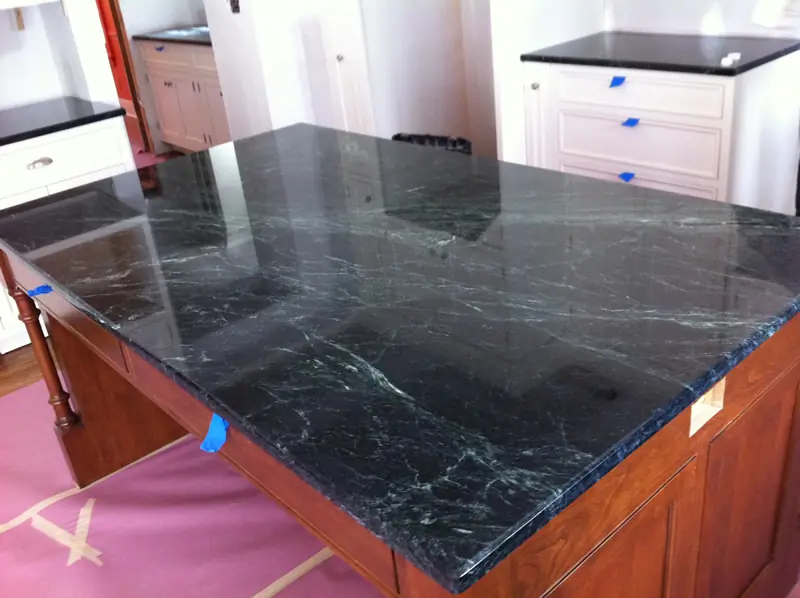
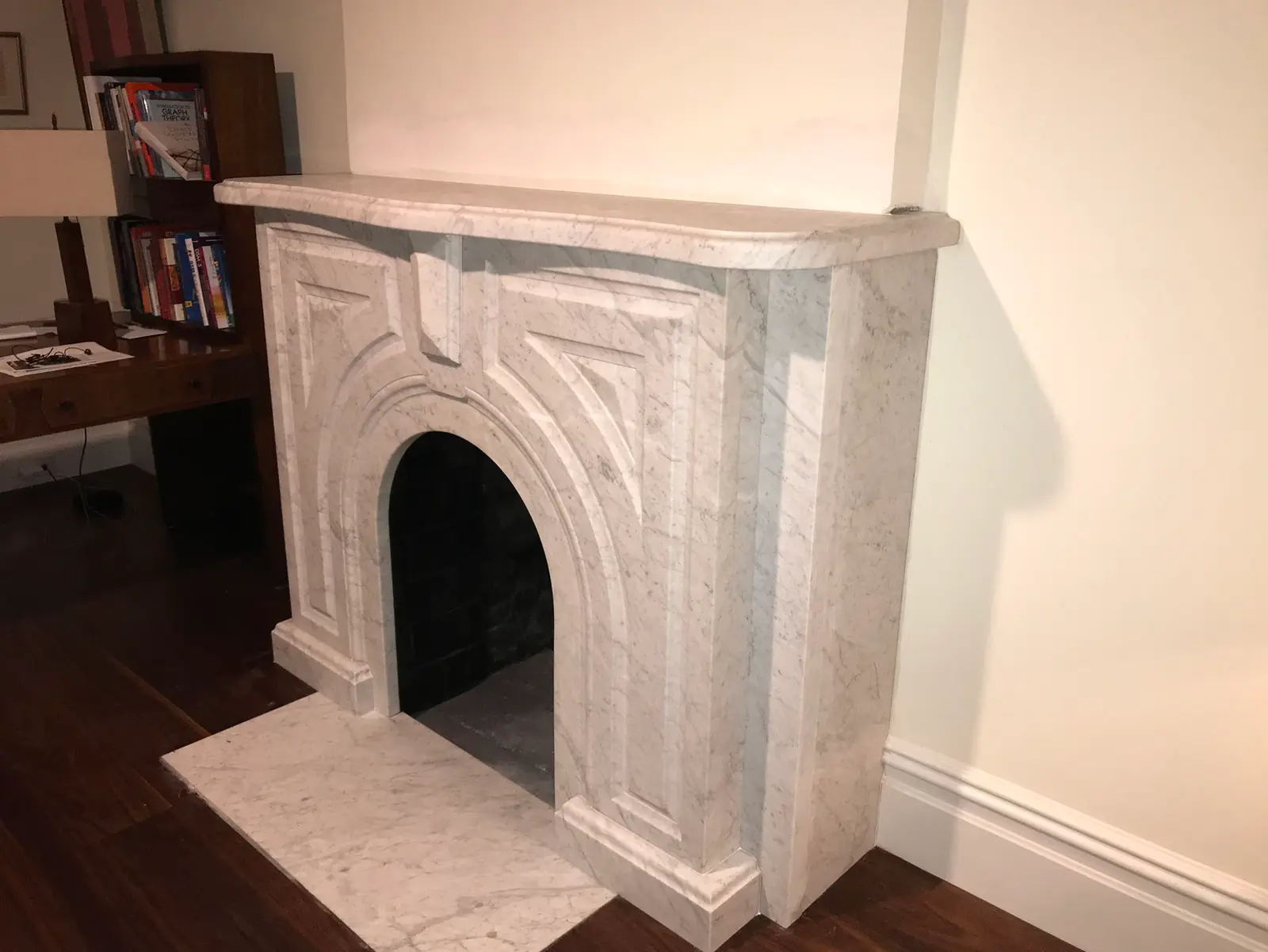
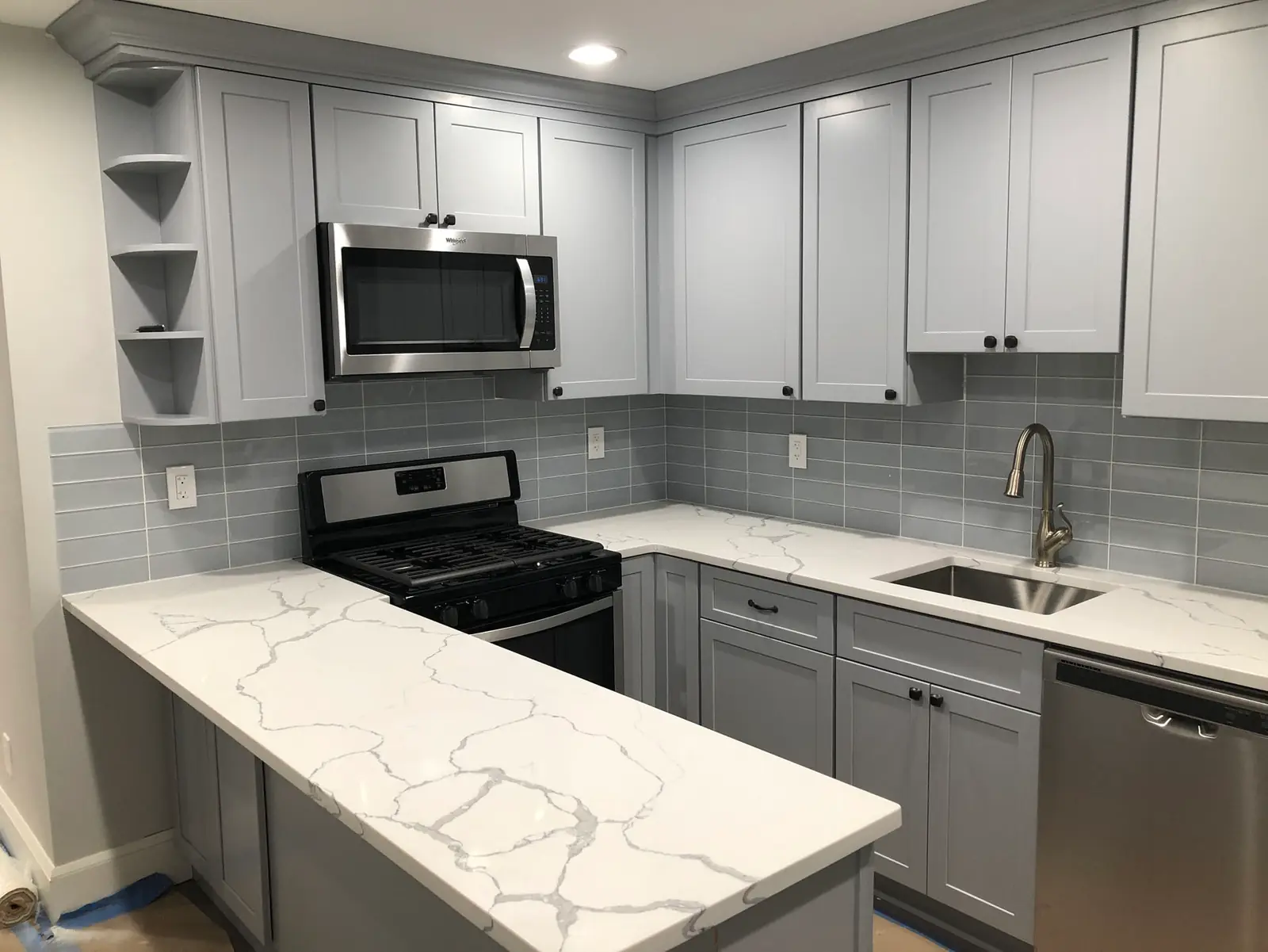
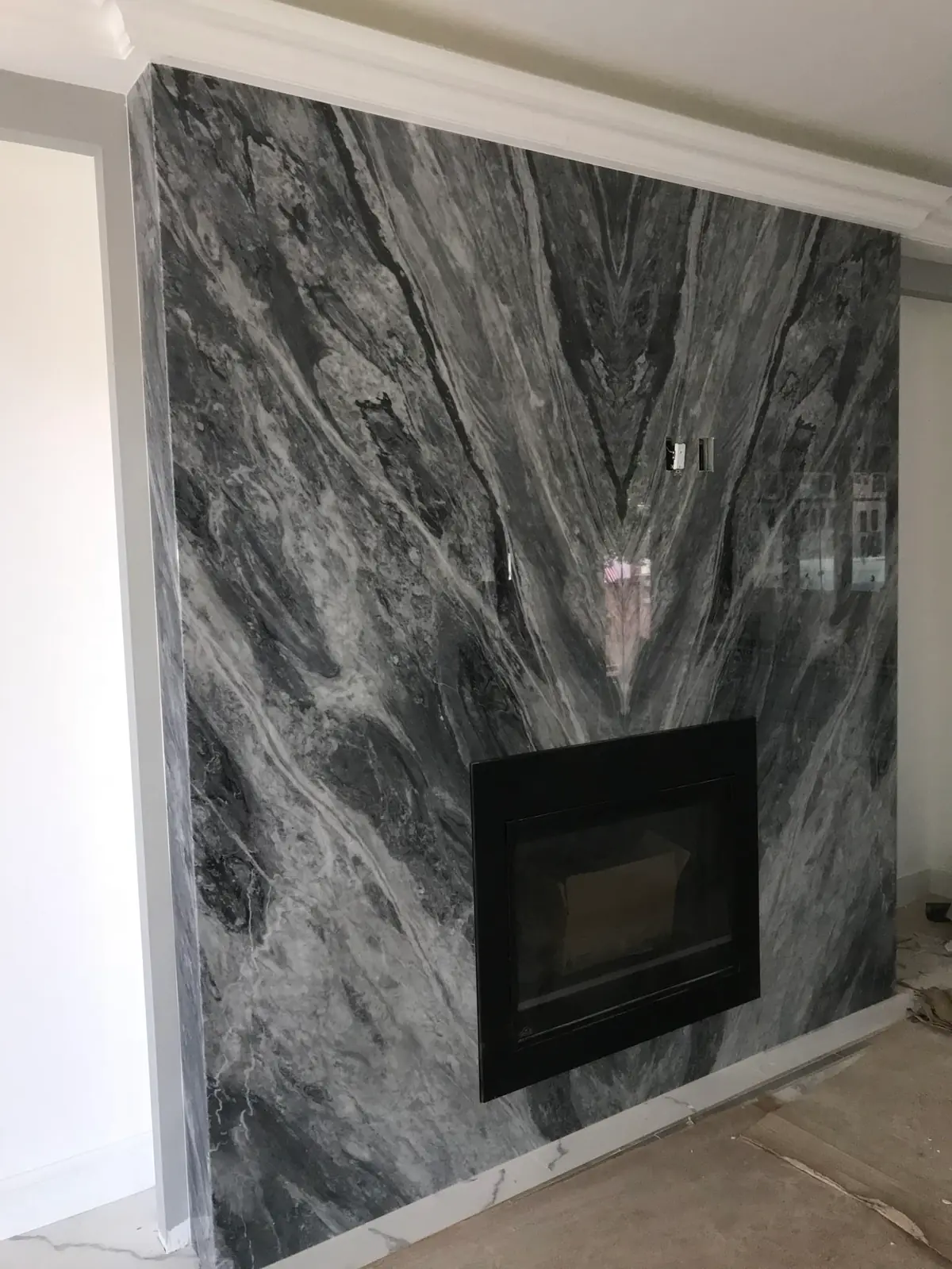


One page for each.
Granite is the biggest catalog at over 300 types. The shop also cuts marble, quartz from Cambria, Silestone and Caesarstone, and Dekton. Cambria lists the shop as a Cambria Premier Partner on its dealer locator. Open a page for the care, the edges and the questions we hear. The photos on the panels are the shop's own jobs; they are not samples of each material.
Photos are jobs from our shop and may not show that material.
- GraniteNatural stoneOver 300 types of granite in the shop's catalog. Stock is confirmed by the shop.
- MarbleNatural stone33 entries in the marble catalog, including Calacatta Gold and Bianco Gioia. Softer, and honest about it.
- QuartzEngineeredCambria, Silestone and Caesarstone. Cambria lists the shop as a Premier Partner.
- DektonEngineeredA man-made engineered surface, not a natural stone. Thicknesses from 4 to 30 mm.
Edges we cut.
Five popular edges, six premium edges and five laminated layers, each drawn as a cross section.
PopularStraightSquare corner, flat face. Popular1/4 RoundThe top corner eased into a small curve. Popular1/4 BevelThe top corner cut off at an angle, a small flat. Popular1/2 BevelA wider angled cut across the top corner. Popular1/2 BullnoseThe top half of the face rounded, the lower half flat. PremiumCoveA square top lip with the face scooped back underneath. PremiumHollywood BevelDrawn as a long angled cut that takes much of the face. PremiumCove OgeeAn S curve on top with a second scoop below it. PremiumDupontDrawn as a stepped profile: a rounded top, a notch, a lower lip. PremiumFull BullnoseThe whole face rounded into a half circle. PremiumOgeeAn S curve: rounded on top, then scooped, then a flat face. LaminatedLayer 1One strip of stone built up under the top. LaminatedLayer 22 strips built up under the top. LaminatedLayer 33 strips built up under the top. LaminatedLayer 44 strips built up under the top. LaminatedLayer 55 strips built up under the top.
The edge is what you touch and what you knock. The shop's edge gallery names five popular edges, six premium edges and a laminated range from Layer 1 to Layer 5. The gallery does not tie an edge to one material, so ask which suit your stone.
Each drawing is the slab cut through the edge, top surface running in from the left. Our edge profile article covers how to choose between them. These are our own sketches of how each named edge is usually cut, not scans of the shop's samples. The shop's names are from its edge gallery, which shows photographs. Ask for the edge by name when you send your measurements.
The four, side by side.
The words in this table come from the Natural Stone Institute, Use Natural Stone, Cambria and Cosentino, read 2026-11-11. Each cell links to where we read it. Where a cell is about the shop, it links to the shop's own page.
| Property | GraniteNatural stone | MarbleNatural stone | QuartzEngineered | DektonEngineered |
|---|---|---|---|---|
| Heat | Many stones can withstand heat, but the Natural Stone Institute still recommends trivets or mats. Source: Natural Stone Institute | Same trivet advice. The experts' bigger worry for marble is etching and stains, so they ask for cutting boards, trivets and coasters. Source: Use Natural Stone | Cambria says its quartz is not heat-proof and may not take direct heat from pots and pans. It asks for a closed-weave hot pad or solid trivet. Source: Cambria | Cosentino describes it as extreme temperature and fire resistant, with a low coefficient of thermal expansion. Source: Cosentino |
| Stains | An expert says it is not sensitive to most common household acids. Sealing makes it more stain resistant, not stain proof. Source: Use Natural Stone | A calcium based stone, so acids such as citrus, tomato, vinegar and wine can etch it, and red wine and oil can stain it. Source: Use Natural Stone | Cambria calls its quartz nonporous and nonabsorbent, and stain resistant. Source: Cambria | Cosentino says very low porosity makes it extremely resistant to water and stains, which clean off with standard products. Source: Cosentino |
| Sealing | The Institute says most granite countertops do not need sealing, though many gain extra benefit from a quality sealer. Use Natural Stone's experts lean toward sealing most granites. Ask the shop about your slab. Source: Natural Stone Institute | Experts disagree: every nine months to a year, or every 5 to 10 years. A sealer does not stop etching. Source: Use Natural Stone | Cambria says it never needs sealing and asks you not to apply sealers or topical treatments. Source: Cambria | Cosentino's Dekton page does not call for sealing. Check its care guide for your color. Source: Cosentino |
| Look | Natural stone: speckle, flow and color change from slab to slab. Over 300 types in the shop's catalog. Source: the shop's page | Natural stone with veining. The shop's marble catalog has 33 entries, among them Calacatta Gold, Calacatta Cremo, Beige Travertine and Bianco Gioia. Source: the shop's page | Engineered, so the brand sets the design. Cambria says color blotches are put in on purpose and a sample is a small cut of a larger slab. Source: Cambria | Not natural stone. A sintered surface the shop says is made with quartz, porcelain and glass, in thicknesses from 4 to 30 mm. Source: the shop's page |
| Outdoor use | The shop fabricates and installs natural stone indoors and outdoors, and its photos include outdoor counters. Source: the shop's page | The sources here give no outdoor advice beyond marble's acid sensitivity. Talk to the shop before you plan it outside. Source: Natural Stone Institute | The Cambria pages we read do not describe outdoor use. Ask the shop before you plan quartz outside. Source: Cambria | Cosentino says it is unaffected by ultraviolet rays, does not fade, and suits indoor and outdoor projects. Source: Cosentino |
Sources read 2026-11-11. These are statements by makers and associations, not our tests. Quartz rows quote Cambria; other brands publish their own care guides.
Seams: how few, and where.
The shop's philosophy is as few seams as possible and the utmost consideration for where each one is placed. The template, an exact pattern taken on your set cabinets, is where that planning starts.
Seams exist because slabs come in fixed sizes. Cambria lists a standard quartz slab at 122 by 55.5 inches and says an average kitchen runs 50 to 100 square feet, so L and U shaped layouts usually need one. Good questions to ask any fabricator:
Source: Cambria, what to know about quartz surface seams, read 2026-11-11. It is written for Cambria quartz; natural stone varies from slab to slab, so ask the shop about your slab.
Where does each seam go?
Ask for the seams marked on your drawing before anything is cut. Cambria says the stone's pattern, your layout and how you use the kitchen should decide where they fall.
Is one at the sink?
You stand at the sink more than anywhere else. Cambria says a seam at the front or back of the cutout can be more noticeable than one toward a corner or a natural break.
Will the pattern line up?
A veined or high movement design needs its pattern coordinated so the veining crosses the seam naturally. Cambria says a skilled installer can do this, and that it is the part people mean when they say they do not want seams.
Can I see a layout first?
Cambria recommends asking for a digital layout preview before the cut. Some fabricators include one and others charge, so ask this shop what it offers.
How tight is it, and what holds it?
Cambria's guideline is a finished quartz seam no wider than 1/32 inch, joined with stone adhesive that is usually matched to the slab's main background color.
Four questions that settle it.
Answer these before you fall for a photo. Then send us your measurements and the written estimate will follow the stone you pick.
Sources: Natural Stone Institute, Use Natural Stone, Use Natural Stone, Cambria, Cosentino.
What will touch it?
Hot pans, lemon, red wine, oil. The first rows of the table answer this. Marble etches under acid, granite is described as insensitive to most household acids, and Cambria's quartz is not heat-proof. Granite, marble and Cambria quartz all come with trivet advice.
How much upkeep will you do?
Sealing is where they split. The Natural Stone Institute says most granite does not need it and many tops gain from it, and the experts disagree about marble. Cambria says its quartz never needs it, and Cosentino's Dekton page does not call for it. Pick the routine you will actually keep.
Is it going outside?
The shop fabricates natural stone for indoor and outdoor use. Cosentino says Dekton is unaffected by ultraviolet rays. For marble and quartz outdoors, no source on this page backs a yes, so ask first.
What do you want to look at every day?
Natural stone varies from slab to slab. Quartz is designed by the maker. Dekton is a sintered surface that is not natural stone. The shop's catalog lists over 300 granites, and its marble catalog has 33 entries. The process page invites you to visit the stone yard so the shop can help you choose.

Look at the slab, not the screen.
A table cannot show you a vein, and a catalog entry does not promise stock. The shop confirms what is on hand, and its process starts with an estimate from your measurements and an invitation to visit the stone yard, where it helps you choose the material that is right for you.


Send the measurements. We write the estimate.
Tell us which material you are leaning toward. We read your drawing and your layout, and the written estimate follows from them.